
 Estimated Read Time: 4 Minutes
Sections in this article:
- Step 1: Add Gatekeeper to your Enterprise Applications
- Step 2: Test the SSO Connection
- Step 3: Restrict Access to Only Allow Microsoft SSO
-
Before proceeding with the configuration of Microsoft SSO, follow the recommendations in the SSO Best Practices Guide.
- To set up Enterprise Applications using SAML, see the Configure SAML v2.0 on Microsoft Entra article.
Step 1: Add Gatekeeper to your Enterprise Applications
Before configuring authentication settings in Gatekeeper, you must set up a custom application in Microsoft Entra ID.
- From the Azure portal, navigate to Microsoft Entra ID.
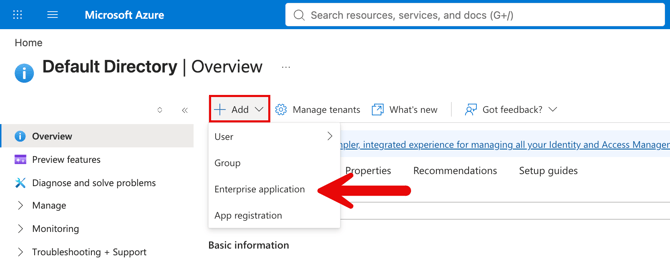
- Click Add, then select Enterprise Application.
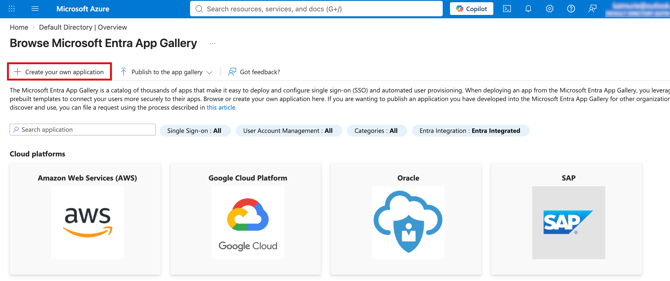
- Click ➕ Create your own application.
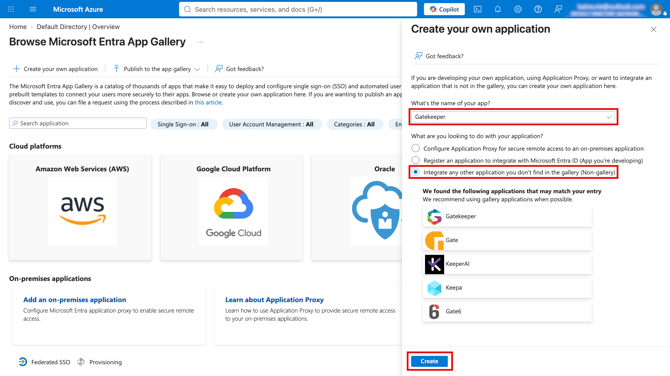
- Enter a name for the application (e.g. Gatekeeper), then click Create. Create a custom application, do not select a pre-existing gallery application.
-
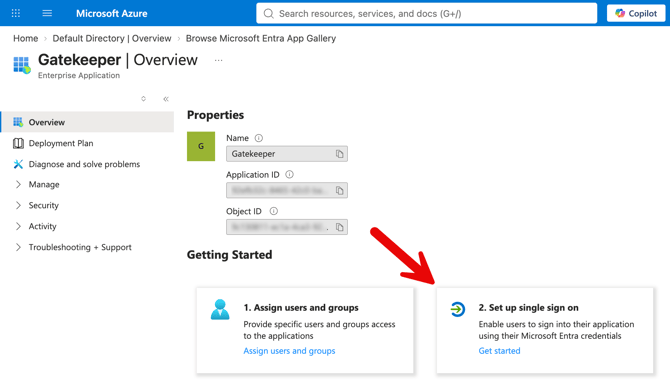
Under Getting Started, click Set up single sign on.
- Select Linked as the SSO type.
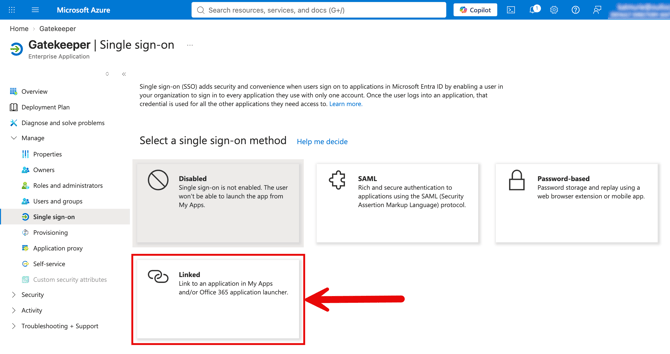
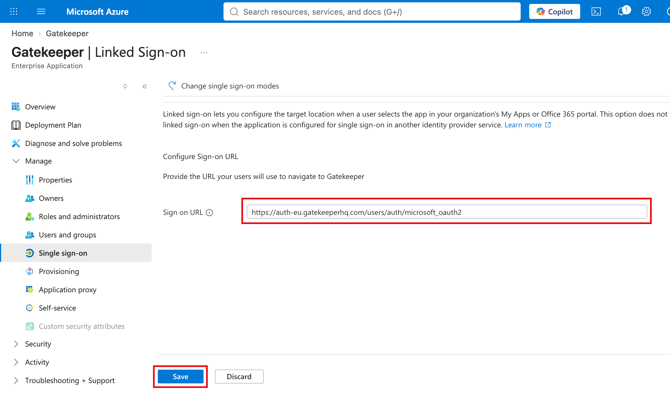
- Enter the Sign on URL for your region using one of the options below:
- If US: https://auth-us.gatekeeperhq.com/users/auth/microsoft_oauth2
- If Canada: https://auth-ca.gatekeeperhq.com/users/auth/microsoft_oauth2
- If EU: https://auth-eu.gatekeeperhq.com/users/auth/microsoft_oauth2
- If APAC: https://auth-apac.gatekeeperhq.com/users/auth/microsoft_oauth2
- Click Save.
- As the final step, you can assign the users or groups in Microsoft Entra who should be able to authenticate and log in to Gatekeeper.
Part 2: Log in to Gatekeeper with Microsoft
- Log out of Gatekeeper.
- On the login screen, click Microsoft.
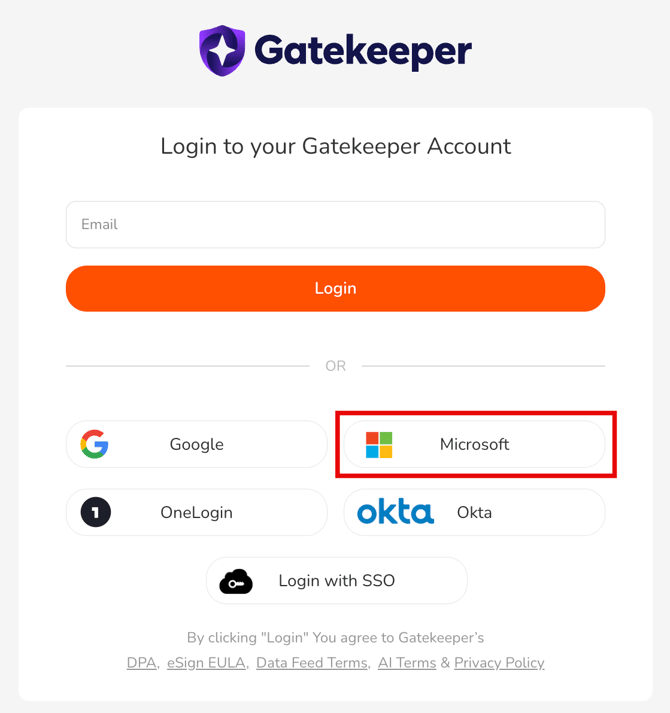
- Enter your credentials and sign in.
You are now logged in to Gatekeeper via your Microsoft account. When troubleshooting login issues, verify the case sensitivity of both the email address and password.
Note:
- Access to the Vendor Portal will remain via username and password, even when SSO authentication is set.
- Access to the Employee Portal via Microsoft SSO can be enabled/disabled in the Just In Time Provisioning settings screen.
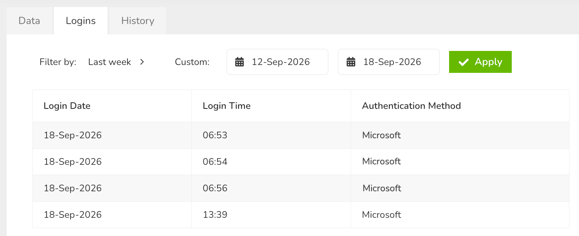
- It's recommended to verify if other users can log in successfully via Microsoft by checking their login history. To find this, from the navigation menu, expand Settings and click Users. Click on a user's name, then go to the Logins tab.
Part 3: Restrict Access to Only Allow Microsoft SSO
Once you have verified that this app has been set up successfully and that users can authenticate via SSO, you can lock your Gatekeeper environment so that Microsoft SSO is the only valid login option. To do this:
- From the navigation menu, expand Settings, then click Configuration.
- Click Authentication.
- Select the Require Microsoft Single Sign On (SSO) radio button.
- Enable the Support Access toggle to allow tenant users with the @gatekeeperhq.com domain to bypass your SSO authentication requirements, so that they can assist with any support enquiries related to your tenant. It is strongly recommended to enable this.

- Click Save.
Note: If you would like to continue allowing users to log in using the standard username and password set from within Gatekeeper, as well as Microsoft SSO authentication methods, select the Standard authentication or Allow all authentication methods radio buttons.
FAQs