
 Estimated Read Time: 4 Minutes
Sections in this article:
Create Spend Records Manually
To add spend data against a vendor record one by one:
- From the navigation menu, expand the Vault, then click Vendors.
- Click the vendor you want to apply spend to. This will open the record.
- Click Add, then select Spend.
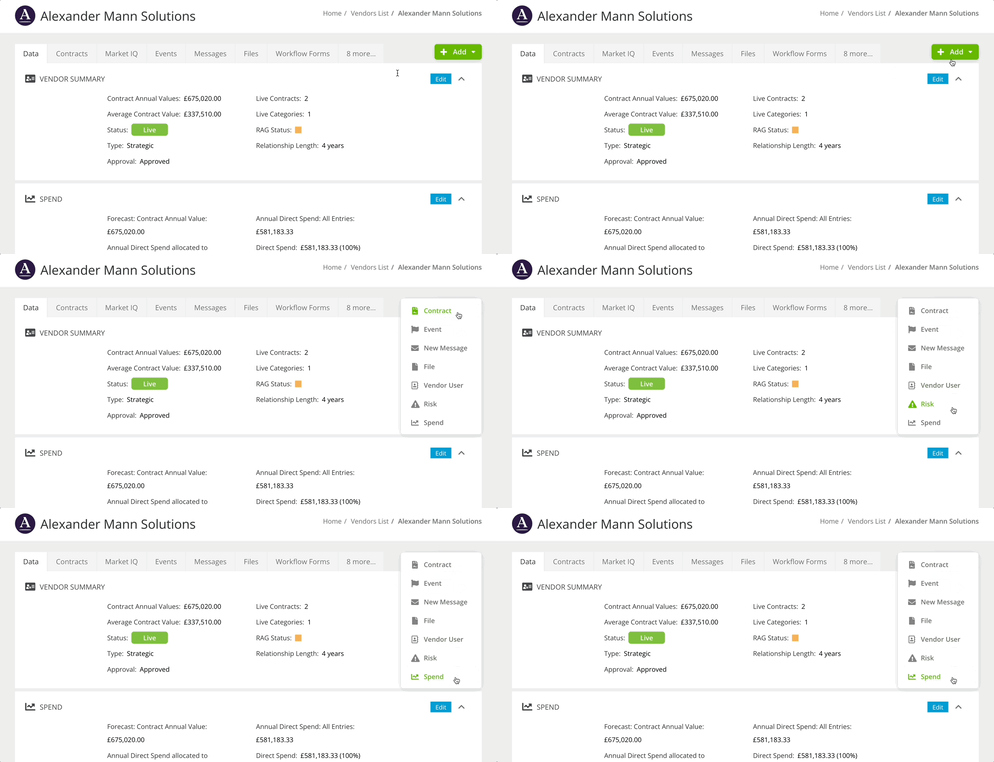
- Populate the fields according to your requirements, then click Save.
Bulk Import Spend Data
Rather than adding spend records one by one, bulk import allows you to manage this data at scale using a spreadsheet. Once your file has been uploaded, you can review and edit the data directly within the import screen, correcting errors, updating values, and removing rows without having to amend your file and restart the process.
Note: Although it's recommended to bulk import using the provided template, this is not mandatory. Gatekeeper will automatically suggest matches for your column headers on import, so any file with mappable headers can be used.
To add new spend data in bulk:
- From the navigation menu, expand the Vault, then click Vendors.
- Click Add, then select Import Spend.
- Click Excel template or CSV template to download a blank version of the import template.
.png?width=670&height=191&name=bulk%20import%20risk%20(download%20template).png)
- Populate the file with the relevant data, ensuring all mandatory fields are completed. Refer to the Field Mapping Guide tab for detailed instructions and guidance specific to your tenant configuration.
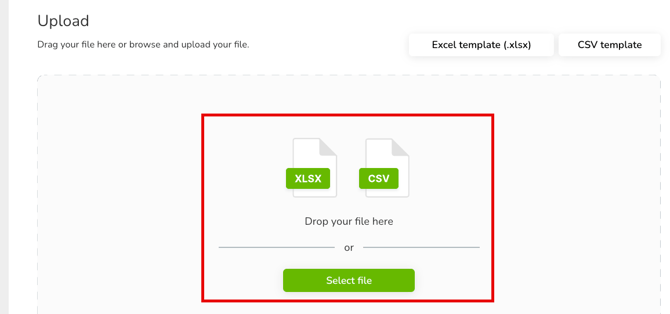
- Return to Gatekeeper and drag and drop the file into the upload area, or click Select file to locate it on your device.
- If you have uploaded a file with multiple sheets, select the checkbox for the relevant sheet, then click Continue. Files with only one sheet will skip this step automatically.
- Confirm the row in your spreadsheet that contains the column headers by selecting it, then click Continue.
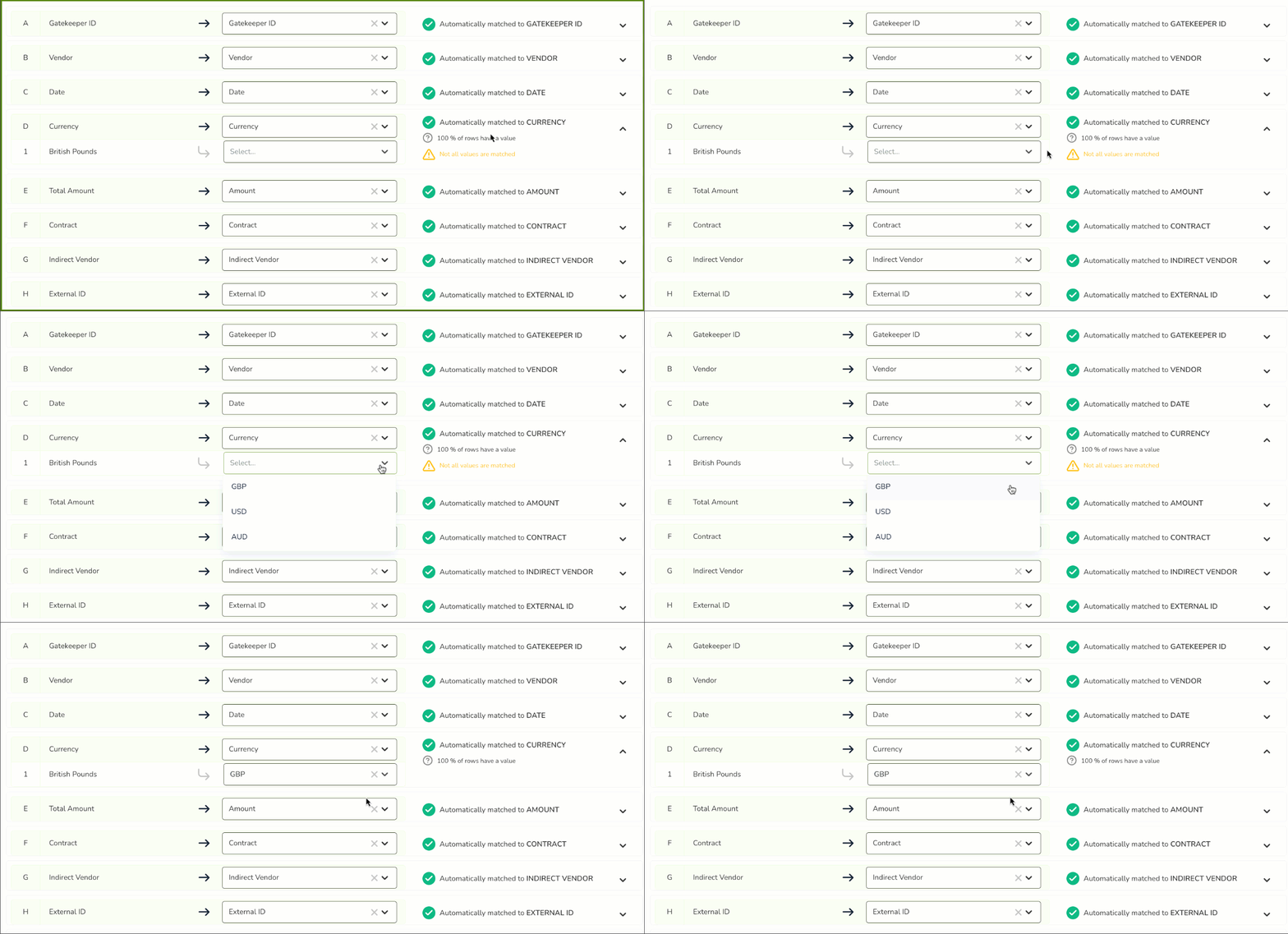
- Gatekeeper will automatically suggest matches for your spreadsheet columns and values to the corresponding fields and values in your tenant. Review the suggested matches and update any using the dropdown lists as required, then click Confirm.
- Review the data before importing. Any errors will be highlighted. To amend the data:
- Click Find Error to navigate to the affected cell, or use the toggle to view only rows with errors.
- Hover over a highlighted cell to view an error message.
- Correct errors in-line, or use Find and Replace to correct multiple errors at once.
- To remove a row from the import, select the row and click Delete.
- Once all errors have been resolved and the data is ready, click Complete import.
- Click Import rows to finalise the import.
On completion, your spend records will be visible within the Spend tab of the relevant vendor record.
Spend Field Descriptions
The table below outlines the fields available when creating a spend record:
| Field | Description |
| *Date | The date that the spend occurred on. |
| *Currency | The currency the spend value is in. |
| *Amount | The value of the spend. |
| *Vendor | When spend records are added manually via the UI, selecting the vendor from a list isn't required. For imported data, the vendor name must be entered. |
| Contract | To associate spend with a specific contract, select the relevant record from the dropdown list. The contract must be allocated to the vendor. |
| Indirect Vendor | If you would like to capture spend against any indirect vendors, select the vendor from the list. For example, if an Apple Mac is purchased from a local computer store, the store would be the direct vendor and Apple is the indirect vendor. |
| External ID | Use this field to match the spend item with an ID from an external system. |
| Account Code | The account code of the spend item. |
| Description | A description of the spend item. |
Mandatory fields are marked with an asterisk*.
FAQs