
 Estimated Read Time: 5 Minutes
Sections in this article:
Folders can be added to organise files on a record. You can add folders to individual records, or configure a default folder structure that’s applied to all new contract and vendor records.
Add Folders to a Record
Folders can be added to organise files within contract, vendor, project, and entity records.
- From the navigation menu, expand the Vault, then click the relevant option (i.e. Vendors, Contracts, Projects, or Entities) depending on where you wish to create a folder.
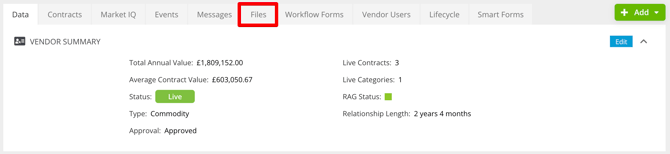
- Click the name of a record to open it, then click the Files tab.
- Click the Add New Folder icon.

- Enter a title, and select the Share within the Vendor Portal checkbox if the files within the folder should be visible to Vendor Portal users.

- Click Save.
Note: Users must be a Vendor Portal Administrator to share a folder with the Vendor Portal.
Organise Files and Folders
Click and drag files and folders to move them into another folder, or drag folders up or down to change their order.

To create a sub-folder, click a folder to open it, then click the Add New Folder icon and enter a name. You can nest as many tiers of sub-folders as you need.
Delete Folders
To delete a folder, expand the 3 dots and click Delete. Confirm the changes to proceed with deletion. This process cannot be undone.
Note: Folders can only be deleted if they do not contain any files or sub-folders.
Configure a Default Folder Structure
Administrators with the Configuration additional permission can create a default folder structure that is automatically applied to new vendor and contract records. These folders can be restricted to specific record types, for example, only contracts with a type of NDA. To configure this:
- From the navigation menu, expand the Settings option, then click Configuration.
-
Click Folder Structures.
- Click Add New Folder in the Contracts or Vendors section as appropriate.

- Complete the details for the new folder:
- Enter a name.
- If required, select the types that this folder will be added to. If none are selected, this folder will be added to all new records.
- If the files within the folder should be visible to Vendor Portal users, select the Share within the Vendor Portal checkbox.

- Once finished, click Save.
Note:
-
The folder structure applies to new contract and vendor records only, so existing folder setups won’t be disrupted.
- Users must be a Vendor Portal Administrator to share a folder with the Vendor Portal.
Add Default Sub-Folders
Sub-folders are used to build a tiered folder structure. They will automatically inherit all characteristics of their parent folder:
- If the parent folder is shared with the Vendor Portal, all sub-folders will be as well.
- If the parent folder is restricted to specific types, the same restrictions will apply to its sub-folders.
To do this:
- Expand the 3 dots on the relevant parent folder, then click Add Sub-Folder.

- Enter a name and click Save.
All sub-folders will appear in alphabetical order, with connecting lines to show the relationship to the parent folder.

Note: A default folder structure can include up to five layers of sub-folders beneath a parent folder.
Delete Default Folders
To delete folders or sub-folders from the default folder structure, expand the 3 dots and click Delete. Confirm the changes to proceed with deletion.

Note:
- This process cannot be undone.
- Deleting a folder will delete any sub-folders within it.