
 Estimated Read Time: 15 minutes
Sections in this article:
Note: This article focuses on setting up SCIM integration using Microsoft Entra. For generic information on SCIM, including best practices and troubleshooting steps, refer to the Introduction to SCIM Integration with Gatekeeper.
What is SCIM?
SCIM (System for Cross-domain Identity Management) is an open standard used to automate the provisioning and management of users. It enables identity providers, such as Microsoft Entra, to securely synchronise user data with Gatekeeper, helping to ensure consistency and reduce manual tasks.
Note:
- SCIM provisioning runs every 40 minutes.
- SAML user sync occurs every hour at the 45th minute.
- These intervals are set by Microsoft Entra and can't be changed in Gatekeeper.
- Users created via SCIM cannot sign in until the SAML sync has completed.
Configuration
To learn how to set up SCIM in Microsoft Entra, watch the video demonstration or follow the steps below:
Permissions Required for Setup
To follow the steps in this article, you’ll need:
- An Azure Entra tenant with admin permission to create enterprise applications and manage group assignments (i.e. Application Administrator and Groups Administrator).
- Additional Azure Entra permissions may be required, depending on your organisation’s configuration.
- Global Administrator permissions in Gatekeeper, with the Configuration additional permission.
Step 1: Set the Fallback Team and Mapping
The fallback team is where users will be assigned if their groups or permissions are deleted. The default mapping should grant only minimal permissions. To do this:
- From the navigation menu, expand Settings then click Configuration.
- Click System for Cross-domain Identity Management (SCIM).
- Select the relevant team from the Select Fallback Team dropdown list.
- Click the
 pencil icon on Default Mapping.
 - Select the relevant permissions, then click Save.
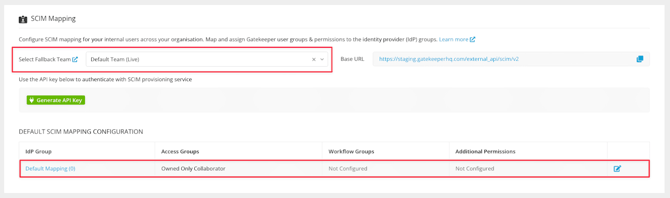
Additionally, you can control the default email report preferences applied when a user is first provisioned via SCIM. To manage this, enable or disable the Owned by Me and All Reports toggles as required.

Note: These settings apply only the first time a user is provisioned. Gatekeeper will not overwrite the saved preferences of existing users.
Step 2: Set Up the Enterprise Application in Microsoft Azure
Note: If you have already set up an Enterprise Application while configuring SAML, skip to Step 4.
- Log in to the Microsoft Azure Portal.
- Navigate to Enterprise Applications.
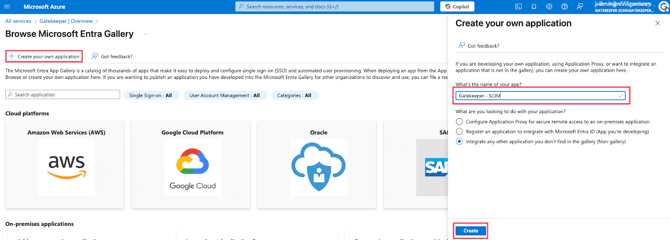
- Click New Application.

- Click Create your own application, then enter a name e.g. Gatekeeper.
- Select the Integrate any other application you don’t find in the gallery radio button, then click Create.
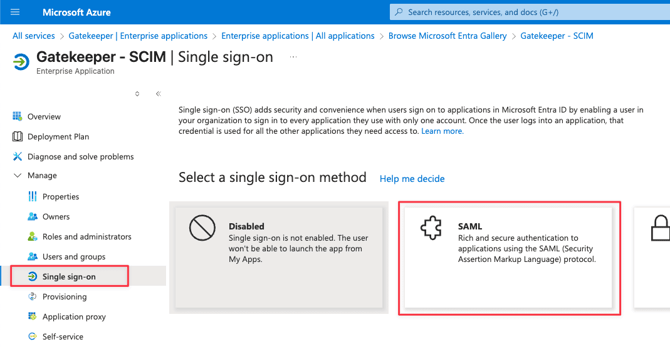
- From the navigation menu, click Single sign-on , then select SAML.
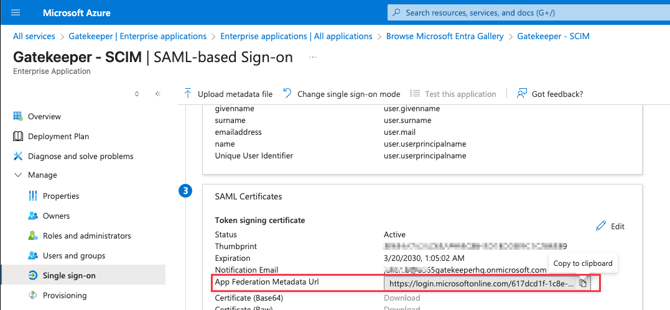
- From the SAML Certificates section, copy the App Federation Metadata Url.
Step 3: Configure SAML v2.0 on Microsoft Entra
To enable user login, you must configure SAML Single Sign-On between Microsoft Entra and Gatekeeper. To do this, follow the instructions in Configure SAML v2.0 on Microsoft Entra.
Step 4: Configure SCIM Provisioning
With SAML configured, the next step is to set up SCIM provisioning to automate user management between Microsoft Entra and Gatekeeper.
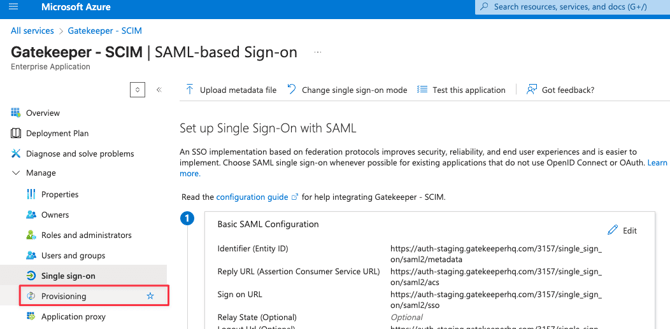
- Within the Microsoft Azure Enterprise Application, click Provisioning from the navigation menu.
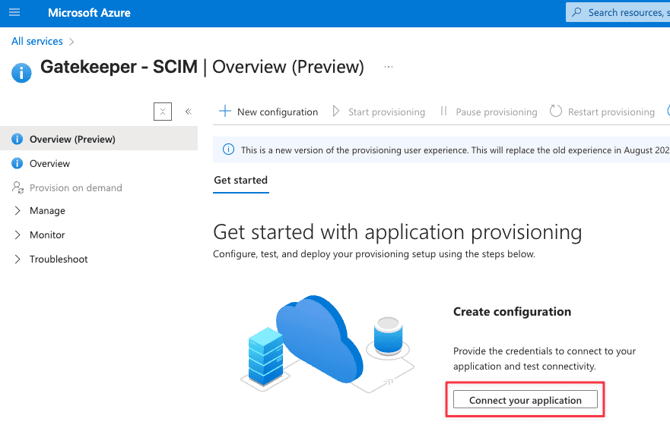
- Click Connect your application.
- In a separate Gatekeeper tab, from the navigation menu, expand Settings then click Configuration.
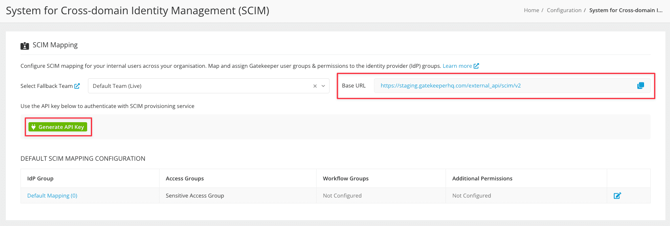
- Click System for Cross-domain Identity Management (SCIM).
- Copy the Base URL, then click Generate API Key.
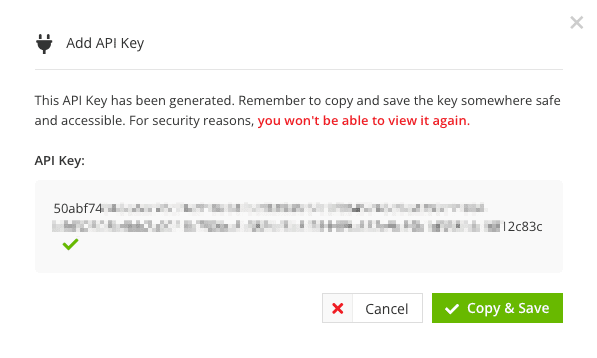
- Copy the API Key. For security reasons, you won't be able to view the key again after clicking Copy & Save.
- In Azure Entra, enter the Base URL into the Tenant URL field and the API Key into the Secret Token field.
- Click Test Connection to ensure it has been successful, then click Create.
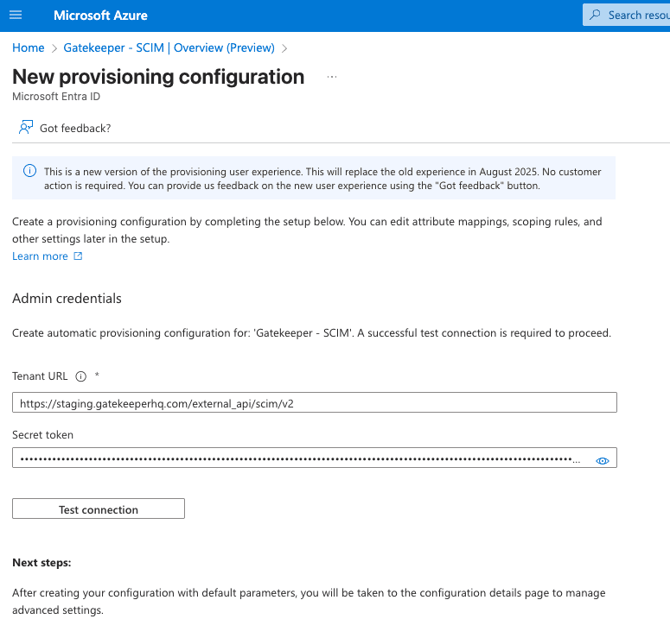
Step 5: Adjust User Mapping
To ensure user details are mapped correctly in Gatekeeper, you’ll need to update the default user attribute mapping in Microsoft Entra.
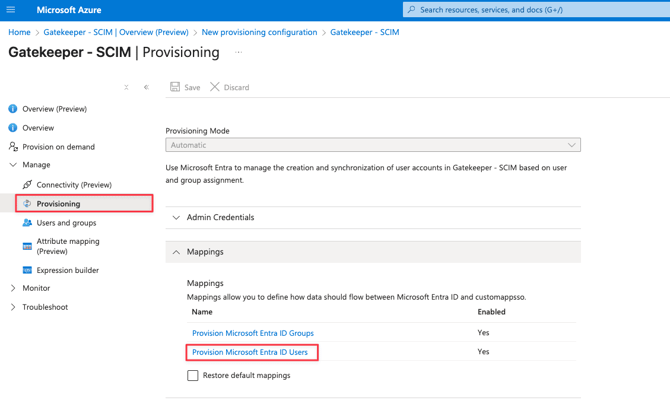
- In Microsoft Azure, from the navigation menu, click Provisioning, then expand Mappings and click Provision Microsoft Entra ID Users.
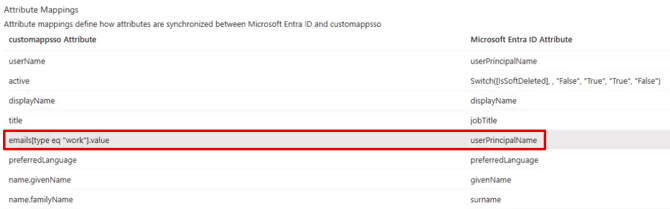
- Locate the customappsso Attribute: emails[type eq "work"].value. By default, this is mapped to the mail attribute.
- Click Edit, then select userPrincipalName from the Source attribute instead.
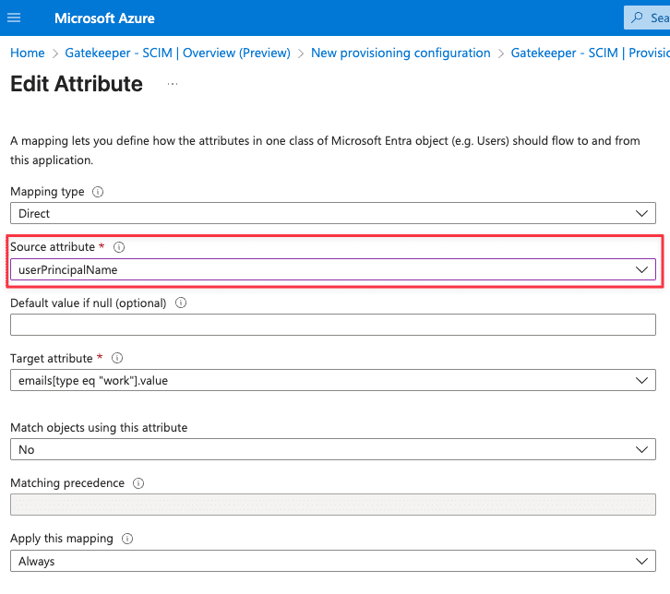
- Save the configuration.
You'll also need to create a custom attribute to map the user's team.
- To create a custom attribute, at the bottom of the Attribute Mapping page, select the Show advanced options checkbox.
- Click Edit attribute list for customappsso.
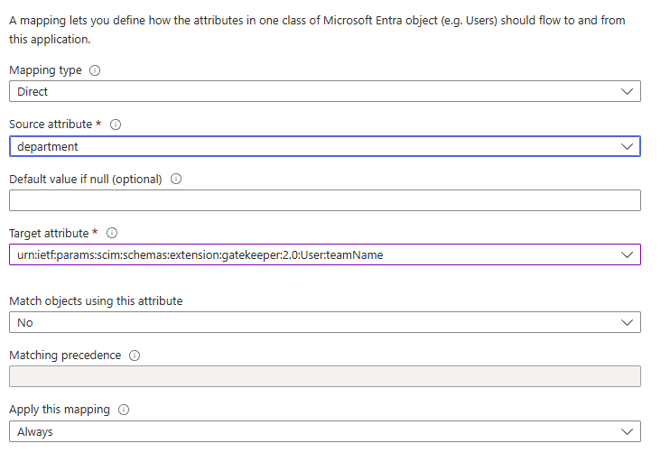
- Add a new attribute using the following value: urn:ietf:params:scim:schemas:extension:gatekeeper:2.0:User:teamName

- Click Save, then return to the Attribute Mapping page.
- Locate the department mapping, then delete it.
- Create a new mapping, then map the department attribute, or the relevant IdP profile attribute you are using for Gatekeeper teams, to the new target attribute.
- Save the Attribute Mapping.
Note: The department/attribute name in Entra must match the team name in Gatekeeper exactly. This match is case sensitive.
Step 6: Assign Users or Groups
Once provisioning is configured, you can assign users or groups to the SCIM-integrated application in Microsoft Entra.
- Go to Users and Groups in the application.
- Create a test user or group in Microsoft Entra.
- Assign the group or user to the SCIM-integrated app.
- To test, you can use Provision on Demand from the provisioning page.
- Select a user from the group and click Provision.
Note: SCIM syncs every 40 minutes, and SAML syncs every hour at the 45th minute. Logging in via SSO might be delayed if attempted before the next sync cycle.
Step 7: Verify Provisioning in Gatekeeper
After assigning users or groups in Microsoft Entra, verify that they have been successfully provisioned into Gatekeeper.
- In Gatekeeper, from the navigation menu, expand Settings then click Configuration.
- Click System for Cross-domain Identity Management (SCIM).
- You should see the provisioned group and user appear. The system applies the default permissions initially.
- Click the pencil icon for the group to configure group permissions (e.g. Global Collaborator or Administrator), then click Save.
Note:
- A group will only sync to Gatekeeper from Microsoft Entra once a user has been added to it.
- If a user is already synced, and you later update their group’s permissions, the user will automatically inherit the new permissions.
-
When a user belongs to multiple groups, Gatekeeper will:
- Merge all assigned permissions.
- Grant the highest privilege level among all groups.
For example, a user in both Global Collaborator and Global Administrator groups will be assigned as a Global Administrator, as this is the highest permission.
Manage Groups in Gatekeeper
You can manage groups in Gatekeeper:
- From the navigation menu, expand Settings, then click Configuration.
- Click System for Cross-domain Identity Management (SCIM).
Once a group has synced from Microsoft Azure, it will appear in the table.
Edit Mappings for IdP Groups in Gatekeeper
To manage the permissions that will apply to users in that group:
- Click the pencil icon on the relevant group.

- Select the groups and permissions required.
- Click Save.
Note: The IdP groups can be assigned:
-
both RBAC access groups and standard roles and permissions
View Users in an IdP Group
To view which users have been synced as part of an IdP group, click the name of the IdP Group.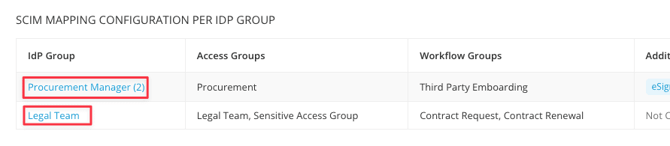
The table displays all active and pending users belonging to this IdP Group. Archived users are not displayed. The following information is included to help with troubleshooting and group membership audits:
- Name: click this link to navigate to the user's profile page
- Status: Active or Pending
- Team: the Gatekeeper team the user belongs to
- Other IdP groups: all other groups the user is a member of
- SCIM ID: the unique identifier assigned by the IdP

Remove Users
Removing a user from the group in Azure will revoke their Gatekeeper access once the sync is complete. Use the Restart Provisioning function in Microsoft Entra to trigger an immediate update.
Troubleshooting
User can't sign in even though they're provisioned:
- Verify the user is assigned to the application in Azure Entra.
Username mapping errors:
- Ensure the email mapping uses userPrincipalName instead of mail.
Provisioning not working:
- Check the provisioning interval (default is 40 minutes).
- Use Restart Provisioning if needed.
Note: For generic troubleshooting steps and FAQs, see the Introduction to SCIM Integration with Gatekeeper.